
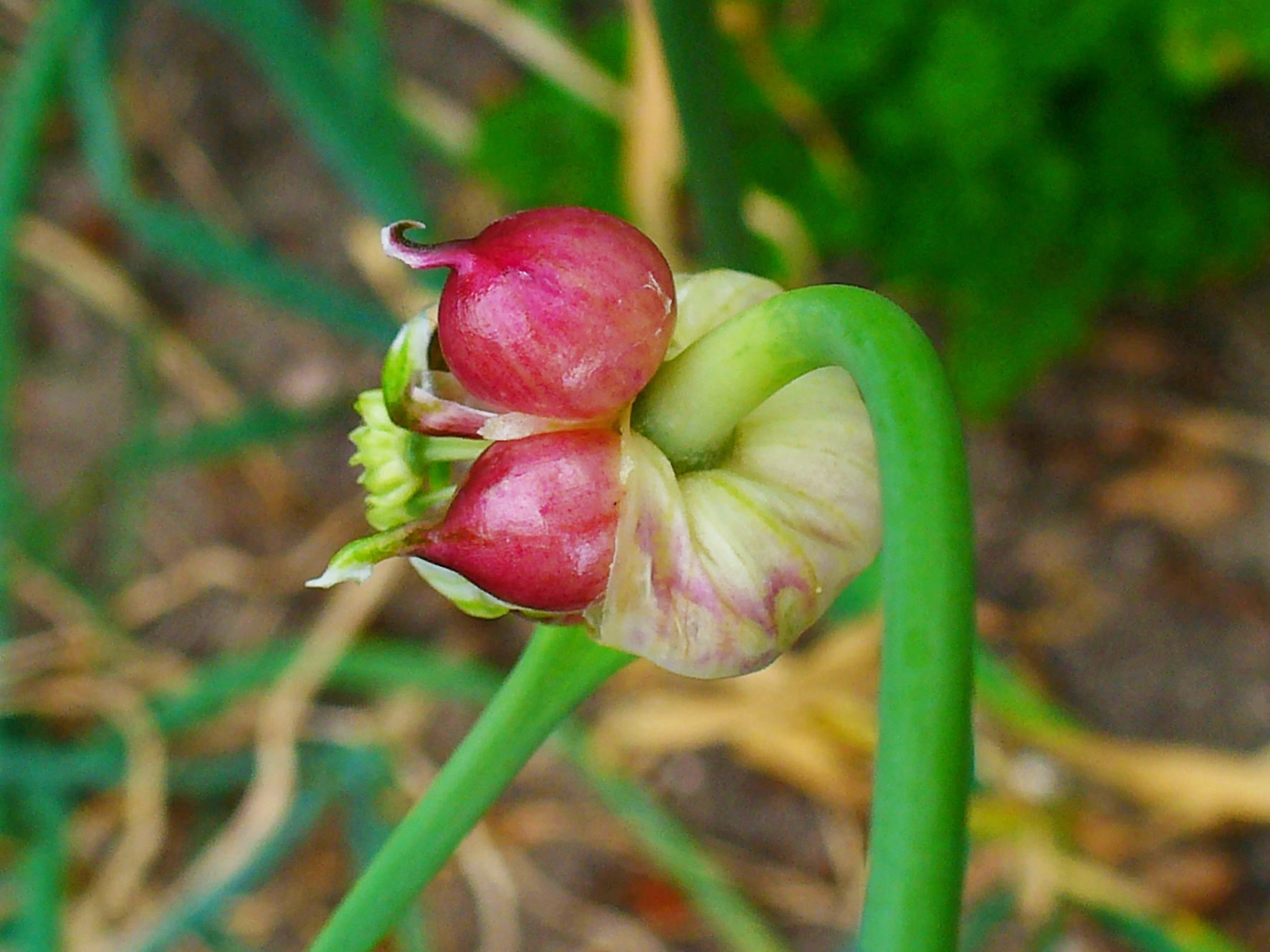
Garlic (Allium sativum) is a cold-hardy bulb crop well-suited to Zones 3-9, planted in fall for summer harvest. Hardneck varieties preferred in colder climates for flavor and cold tolerance; requires well-drained soil and moderate water.
Crop Snowflake Score
/acre
/acre
/acre
years
Overview
Growing Season
- Plant
- Mid-late October – Mid-late October
- Harvest
- Early-mid July – Early-mid July
- Frost-free days
- 150+
Yield
- Typical yield
- 4,000 lbs/acre
- Productive lifespan
- 1 years
- Years to full prod.
- 1
- Labor
- 72 hrs/acre
Market Fit
Active Regional Buyers
No buyer on record for this crop in the catalog's buyer network.
Price Trend Stable/Up
3-year price trend recorded as "increasing".
Supply Below Demand
3 of 6 documented channels rate viability "strong". Sold into regional rather than national markets, vegetable supply here generally trails that demand.
Multiple Buyer Channels
5 of 6 documented market channels rate viable or better (farmers_market, direct_to_consumer, restaurant, csa). Multiple independent routes to market.
Value-Added Potential
4 viable direct-market channels (farmers_market, direct_to_consumer, restaurant, csa). Supports value-added and margin capture beyond wholesale.
Market Growth Projected
Mature vegetable market; growth over a 5-year horizon is expected to track population rather than outpace it.
Market Channels
Climate Fit
Hardiness Zone Match
Crop tolerates zones 3-9; region spans 5-6. Overlaps.
GDD Sufficient
Crop needs 2400 GDD (base 50F); region accumulates 2500+. Sufficient.
Precipitation Compatible
Crop needs ~30 in; region receives ~38 in/yr. Compatible, irrigation available as supplement.
Frost-Free Season OK
Crop needs 150 frost-free days; region provides ~180. Sufficient.
Chill Hours Met
Perennial. Region's zone 5-6 winters deliver well over 1,000 chill hours, ample for temperate perennials.
Climate Trend Favorable
Crop spans 7 hardiness zones (3-9). Wide adaptive range buffers against warming trend.
Fit by region
The farm matcher, run on each region's cited climate normals. Soil and site are not included here; add your own on the match page.
Limited by frost-free season. 6 criteria evaluated, 1 not yet researched; 80% cited.
No limiting condition found. 6 criteria evaluated, 1 not yet researched; 80% cited.
No limiting condition found. 6 criteria evaluated, 1 not yet researched; 80% cited.
Climate envelope & site
What the farm matcher compares your conditions against.
Climate envelope
- Hardiness zone
- 3–9
- Frost-free season
- 150+ days
- Heat (GDD base 50°F)
- not yet recorded
- Winter chill
- 240–600 hours
- Rainfall
- 29.5–106.3 in/yr
Below the minimum, irrigation is needed; above the maximum the crop fails.
- Soil pH target
- 6.0–6.5
Extension lime target; within 1.0 of it is correctable.
Site & structure
- Spring frost at bloom
- not yet recorded
- Needs cold-air drainage
- not yet recorded
- Shade tolerance
- none — full sun
- Mature height
- not yet recorded
- Rooting depth
- not yet recorded
- Wind exposure tolerance
- not yet recorded
- Workable slope
- not yet recorded
Height, rooting depth and shade tolerance are the inputs an alley or guild layout needs.
Soil Compatibility
Soil Texture
Drainage
Infrastructure Fit
Equipment Compatible
3 of 8 documented equipment items are crop-specific (38%) against a catalog median of 29%. Above-median share of purpose-built equipment, implying real capital outlay.
Storage Available
2 documented storage routes; at least one (Ambient dry storage) is reachable with conventional on-farm or third-party facilities.
Irrigation Compatible
Requires ~30 in. Deliverable with conventional drip or overhead irrigation.
Field Layout Suitable
Suited to the small-to-mid-size fragmented parcels typical of the region.
Labor Availability
190 labor hr/ac vs catalog 75th percentile 250 hr/ac. Manageable with typical farm labor.
Processing Proximity
No processing or cooperative buyer on record for this crop; product would need to travel or be sold fresh.
Equipment Requirements
planting
Compact tractor for bed preparation and cultivation. Not strictly required for very small plantings (<0.5 acre) where hand tools suffice.
Mechanical garlic planter for operations over 0.5 acre. Places cloves at proper depth (2-3 inches) and spacing (4-8 inches). Small plantings are typically done by hand.
Creates raised beds for improved drainage, which is critical for garlic. Can be combined with plastic mulch layer. Manual bed shaping is feasible for small plots.
For applying straw mulch after fall planting. Mulch insulates cloves over winter, suppresses weeds, and conserves moisture. Can be applied by hand for small plots.
harvesting
Tractor-mounted blade that loosens soil beneath garlic bulbs for easier pulling. Essential to avoid bulb damage. Hand digging with a spading fork works for very small plantings.
post_harvest
Ventilated curing area with racks, screens, or barn floor space. Garlic must cure 2-4 weeks at 75-90°F with good airflow. Fans may be needed to ensure adequate ventilation.
For cleaning cured bulbs — trimming roots and tops. Manual trimming with shears is standard for small operations. Mechanical trimmers available for larger volumes.
Insulated storage at 32-35°F and 65-75% relative humidity for long-term storage of cured garlic. Extends marketable window by several months.
Storage Requirements
Dry cured storage (long-term)
Temperature
30–32°F
Humidity
60–70%
Max Storage
210 days
Ambient dry storage
Temperature
55–65°F
Humidity
60–70%
Max Storage
90 days
Financial Return
Revenue Above Average
Gross revenue $16,000/ac vs catalog median $6,000/ac. Above median.
Input Costs Acceptable
Annual operating cost $3,000/ac vs catalog 75th percentile $6,300/ac. Within typical range.
Payback Period OK
Reaches full production in 1 year. Acceptable payback.
Insurance Available
No federal crop insurance recorded for this crop; risk sits with the grower.
Revenue Per Labor Hour
Net return per labor hour $13.16 ($2,500/ac over 190 hr/ac) vs catalog median $13.16. Below median.
Grants/Subsidies
Vegetable crops are eligible under the USDA Specialty Crop Block Grant Program.
Economics Breakdown
| Avg Price/Unit | $4/per lb (direct/organic) |
| Gross Revenue/Acre | $16,000 |
| Annual Operating Cost | $3,000/acre |
| Establishment Cost | $9,000/acre |
| Total Input Cost | —/acre |
| Net Return/Acre | $2,500 |
| Revenue/Labor Hour | — |
| Crop Insurance | Not available |
Source: Cornell Cooperative Extension, Penn State Extension, USDA RMA, regional budget studies (2025)
Risk Profile
Manageable Pest/Disease
3 of 10 documented risks are high-severity (30%) against a catalog median of 36%. Risk load is manageable by conventional IPM.
Market Diversified
5 viable market channels of 6 documented. Not dependent on a single outlet.
Low Establishment Risk
1 year to full production at $9,000/ac establishment cost. Low establishment exposure.
Climate Resilient
Tolerates zones 3-9 (7 zones). Broad tolerance indicates resilience to seasonal variability.
Regulatory Burden Low
No crop-specific licensing or reporting regime beyond standard food-safety and pesticide rules.
Diversifies Portfolio
Adds a vegetable revenue stream distinct from the region's grape-dominated base.
Known Risks
disease
Devastating soil-borne fungal disease that can persist in soil for 20+ years. Causes white fluffy mycelium on bulb base and stem plate decay. Favored by cool soil temperatures (10-20°C).
Soil-borne fungus causing premature yellowing, stunting, and soft rot at the basal plate. Spreads through infested soil or seed stock.
Fungal disease that infects mature plants through neck tissues or wounds. Gray-brown discoloration and watery decay develop at the neck, often becoming apparent during curing and storage. Favored by cool, wet conditions, high plant density, and excessive nitrogen.
pest
Tiny sucking insects cause silvery feeding damage on leaves, reducing photosynthesis and bulb size. Can transmit Iris Yellow Spot Virus. Major pest globally.
Microscopic mites feed on damaged or diseased bulbs, worsening decay. Often secondary to other damage. Found in storage and field.
Endoparasitic nematode causes bloated, distorted stems and softened bulbs. Can destroy entire crops. Survives in soil for years.
climate
Garlic requires 4-8 weeks of cold temperatures (0-10°C) to properly bulb. Warm winters in subtropical regions or climate change-affected areas may prevent adequate vernalization.
weather
While garlic is cold-hardy, late hard frosts after significant spring growth can damage leaf tips, temporarily reducing growth. Rarely fatal.
market
Chinese garlic dominates global trade at very low prices. Small-scale and domestic growers face price pressure unless targeting premium/local markets.
Garlic must be stored properly (0°C, 60-70% RH) to maintain quality through the marketing season. Improper storage leads to sprouting, shriveling, or mold.
Nutritional Yield
Macronutrients
| Nutrient | Per 100 g | Per acre |
|---|---|---|
| Calories | 149 kcal | 2,352,007 kcal |
| Protein | 6.4 g | 100,394 g |
| Total fat | 0.5 g | 7,893 g |
| Carbohydrates | 33.1 g | 521,861 g |
| Fiber | 2.1 g | 33,149 g |
| Sugar | 1 g | 15,785 g |
Key micronutrients
Uncertainty: Per-acre values are estimates that compound the yield range, edible-fraction assumption, and a single representative nutrient panel. Treat them as order-of-magnitude planning numbers, not nutritional advice. Confidence: high.
Ecosystem Services
Ecosystem service data pending.
The next research-agent rotation will document this crop's contributions to pollinator support, soil health, water quality, biodiversity, and carbon sequestration.
Cultivars
Named varieties and what the sources say sets each apart. A cultivar-specific zone, chill or maturity figure overrides the species value above.
No cultivars recorded yet for this crop.
Grows With / Avoid Near
Documented interactions with other catalog crops — shared pests, allelopathy, rotation effects, alley and understory pairings — for companion, guild and rotation planning. Plan a combination with Garlic →
Avoid near, or plan around (32)
Grows with (1)
Direction matters: a rotation benefit of A before B says nothing about B before A. Interactions are documented pairs only; absence is a research gap, not a clean bill.
Nearby Buyers
Data Sources
Every data point on this page is traceable to its source. Below you'll find the complete provenance trail — which sources were used, when data was last verified, and a full change history.
Primary sources: Data sourced from Cornell Cooperative Extension, Penn State Extension, USDA resources, and regional research.
Economics data year: 2025 · Basis: lake erie
66 tracked changes across 8 data categories